The Overfed Artist.
The hungry vs. The gluttonous: What art and creativity look like under commercialism.

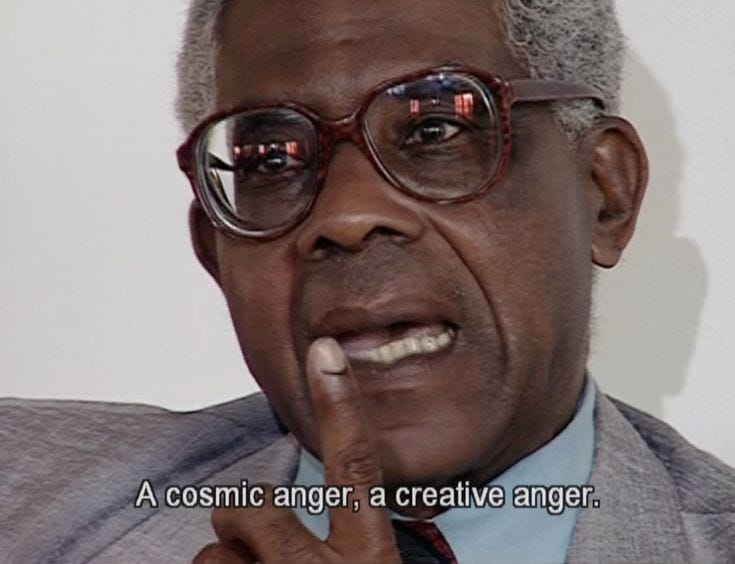
“A land which spits and spews, which spews life. That is what we must be worthy of. This creative part must be nurtured. This anger must be continued. We must continue. And not fall asleep into a sort of acceptance and resignation.” - Aimé Césaire.1
The West is built on the hot coals of individualism. Everyone is fighting for cake slices cut into smaller fractions, whilst billionaires, who often collude together about barricading their wealth, shill out individualist ideology, making sure that those fighting over these halves never fix their gaze on the larger slice of cake just beyond their purview. In one case, a billionaire like Taylor Swift is not fighting for the same halves as her successors. She is admittedly in a lane of her own, though I don’t believe that’s an admirable task. Nevertheless, Taylor Swift can sleep for another ten years and still rake in millions in the time it takes her to blink the crust from her eyes because she is an industry all on her own. Big Swift has amassed an impressive cult following that does not care for the rationale in critiquing a disgustingly wealthy white woman. They care for regurgitations of their favourite fantasy2, artistic merit be damned!
Though with the release of her album The Life of a Showgirl, it seems even Taylor’s most loyal fans are seeing this new “era” in the worst light. In many critiques surrounding the album, there is a pattern of calling out her lack of evolution. It isn’t just a bad album; it’s a sign of the unfortunate times. The catalyst for those calling into question the strange terrain of T.Swift’s career.
 Tiktok failed to load.
Enable 3rd party cookies or use another browser
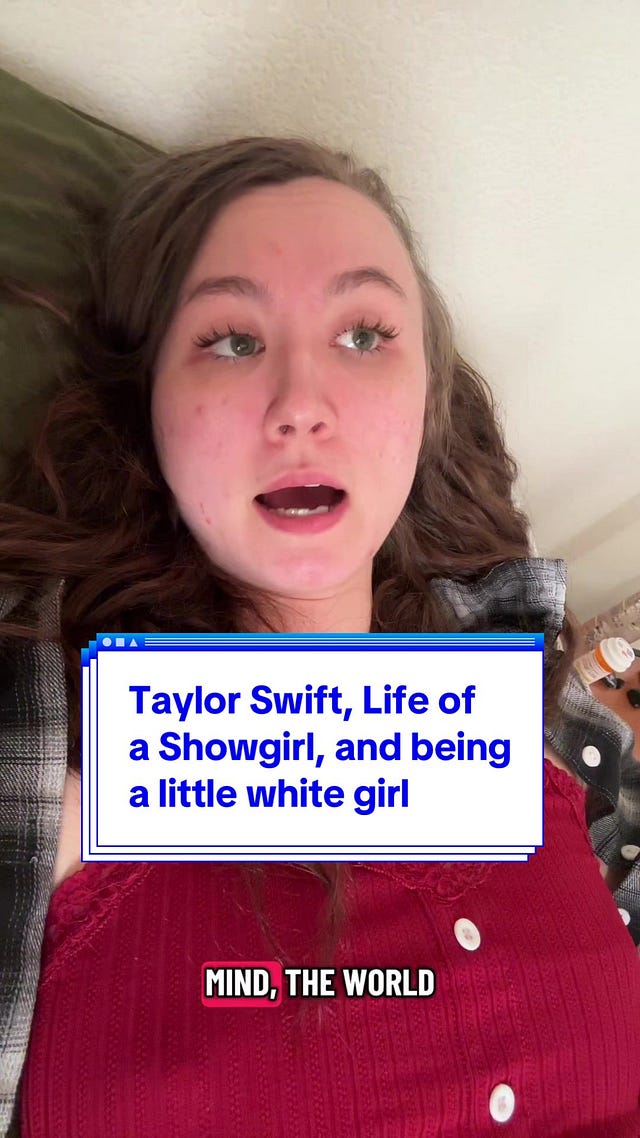
“The brand of being a white girl is very much being a white girl. What happens in a few years when she’s 40?”
For some context, the speaker in this video is not disparaging T.Swift for her age, but rather the importance of how her career-long brand image of “Pop Princess” contradicts with The Life of A Showgirl’s foray into the more adult elements of music entertainment; dazzling visuals teased a burlesque-ian glitz and glamour, lyrics coyly suggesting that she’s sucking dick and cawk, and most importantly, the double-edge sword of being a heavily scrutinzed pop star evolving into womanhood before our very eyes—marketplace feminism come get ur juice.
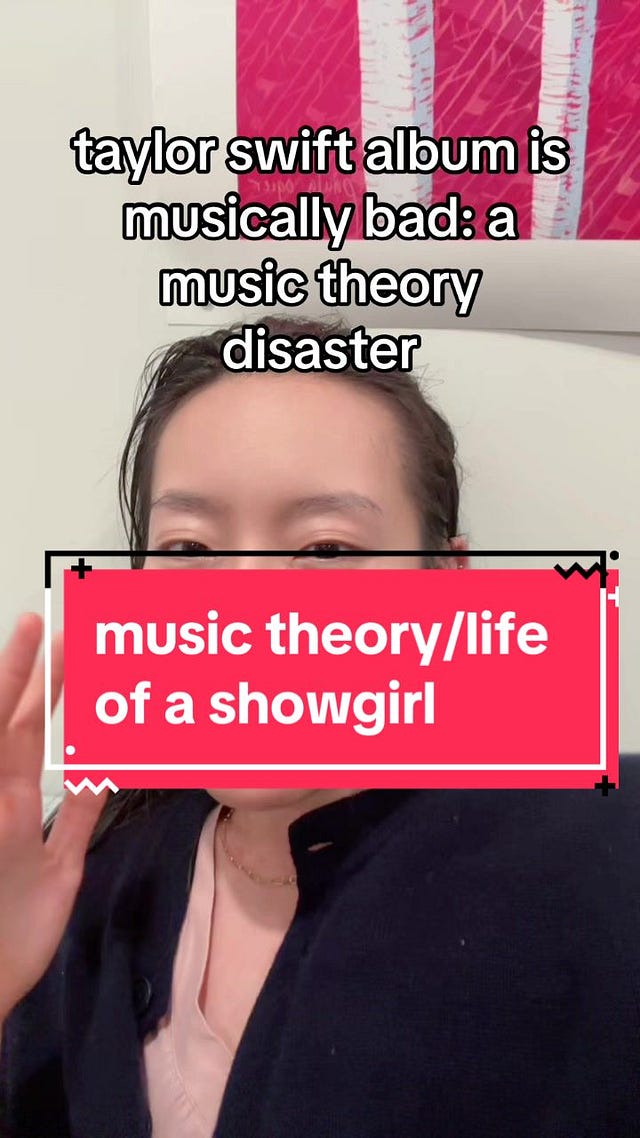
Except, Taylor Swift has not evolved. It is an opinion I share with many of my Taylor-hating friends that her music constantly paddles across the shores of corporate consciousness, omitting any real artistic perspective from even her most subversive of songs. It’s safe, general, and commercial. These are not inherently bad things, but they do paint a wonderful picture of this lack.
 Tiktok failed to load.
Enable 3rd party cookies or use another browser
Now, as someone who knows nothing about music theory and likes to pretend that she knows everything about storytelling, I can agree that Taylor Swift does not have a bad discography. It isn’t my preferred taste, but I will acquiesce to the fact that she has dropped some bangers. The issue is that, and like most of her critics will tell you, this album is an indication of an issue arising from the brand of Taylor Swift. She has become a cultural hallmark for not just white women everywhere, but for the economy, too. “Swiftocomics” was a term coined in 2023 to explore the singular impact of Taylor Swift’s Eras tour. Aside from sponsorships and merchandise sales, Bloomberg estimated that each Eras show grossed around 13 million, “bringing Swift more than 300 million after playing the first 22 concerts.”3
She sits at the helm of pure commodification, a symbol for what art under capitalism can look like. For her fans, this is a reason for pride. The woman they cherish so dearly is succeeding. And she’s self-made! Take that, patriarchy! Except, Taylor Swift amassing all this wealth does not correspond with her music evolving into a product worth all the money that’s being spent on it. As I said before, her marketing works harder than her artistry, and the strategy of regurgitating the same songs and sounds from her most resonant eras is her MO, hence the co-opting of “Eras”. Now, however, she’s venturing off course into something new, an exciting premise for an artist who’s lived so many lives, especially in the spotlight. In Life of a Showgirl, T.Swift wants to present you with a veneer of complexity, but any further investigation, and you’re shown how unwilling she is to push past the boundary where the product and the market might be drawn askew. We knew the end of this before it began, that despite the glossy visuals and the anticipation of an evolved sound, Taylor Swift is hardly going to stray from the thing that lines her pocket.
Commercialise, Commercialise, Commercialise!
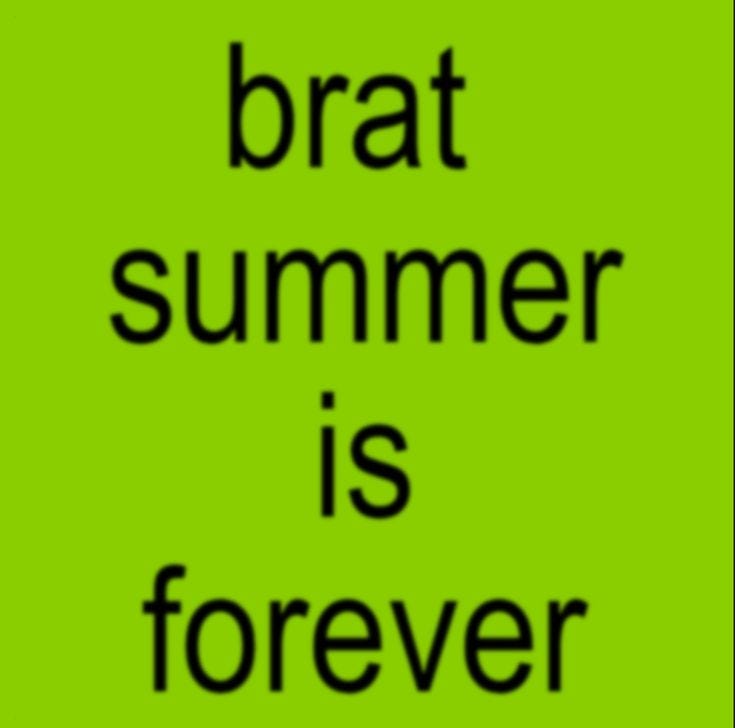
I’ve been writing this essay over the span of a month or so, and I recently read Charli XCX’s The Death of Cool, which I found interesting, both in the responses to it and the material itself, so I’m going to use it as a case study here. The part of it that caught my eye was her assertion that “the rejection of commerciality ‘just because’ is such a boring and immature argument that is perhaps more suited to some mediums than others, but in general I find to be elitist in a way that does not thrill me whatsoever.”
I agree - there is elitism in the notion that art that is well-loved by the general public immediately deems it unworthy of being considered art. I’ve talked about this at length with the publication of a Slate article4 that criticised Interview With The Vampire for being—and I’m paraphrasing here—vain slop for women.
I disagree - commercialisation almost always involves the smiting hand of a large corporation. Mass reproductions, watered-down advertising, beating the dead horse until its skin falls off. Trend forecasts. memeification. Each circle of commercial hell is its own corporate regurgitation disguised as culture-making. Bringing it back to Charli, the most pertinent example I think of was Brat Fatigue, which was also the title of an article that I never got to write because I was too inconsistent with writing—I apologise, Mel Zog, we will have that collab come to fruition one day—Still, the commercialisation of art, especially in our current societal climate, where art is stretched to its maximum for maximum profit, is difficult to ignore. It’s clear in what was left of a cultural moment like Brat, the remnants of which found itself squeezed dry by companies protracting the memified format. I’ve reached peak cycle in my approach to gatekeeping because of this, unfortunately, but I understand the desire to push an artist or a piece of media into the mainstream.
Commercialisation is pure product and profit. If it doesn’t sell, it isn’t a viable product, and that removes the product’s access to larger markets. I understand the necessity, but I also fear the repercussions. Sinners (2025) grossed over £360 million globally through word of mouth and critical acclaim. It’s all anyone talked about this year. A film like Sinners dominating cultural conversations is what commercialisation at its most utopic looks like. It subverts the usual franchise blockbuster formula whilst retaining its own character, despite the success. It’s cool, and it’s commercially viable. The issue of being both or pitting one against the other is complex and circumstantial, but the foundation is the same. Commercialising art might be necessary to get it in front of more eyes, thus broadening the ability to make more art, but we do not live in a society that means well for artists. A Variety report faced backlash during the initial buzz of Sinners for downplaying its 60 million dollar opening, suggesting that Warner Bros’ £90 million spending budget means the film has yet to truly succeed. Aside from what we know now, this reaction did not shock me, but it did remind me how unexpected the film’s commercial success was. A movie like Sinners carries the symbol of “cool” on its back; a priceless experience, watching magic unfold gradually through the course of a soulfully sinister night of blues, jazz, and bloodsucking. When a film like this lands such a monumental W, it’s par for the course that studio execs and media publications would hesitate to regard it as a commercial success. Outside of the blatant racism, this indifference to art is the reason commercialisation, when handled by those who only care for profit, will ultimately ruin a project if left entirely up to the desire for money.
For someone like T.Swift, she has long since been separated from the notion of cool because of how heavily she feeds into commercialisation. Her purview for whether or not her work is successful is measured entirely through numbers, so there is no real need to evolve with your work as an artist, especially not now, when nostalgia rules all5. The goal, ultimately, is to sell something, and if that means watering it down to make it more palatable to suit general tastes, then that is what happens. The death of cool often is commercialisation.
The same issue arises for the publishing world, and this comes in twofold: The first is through romantasy, a genre popularised around 2023-2024, but had its teeth within the industry since the late 2000s. Its most notable torchbearers are Sarah J. Mass, Rebecca Yarros, and Jennifer L. Armentrout. Of course, there are more who are, in my opinion, leagues better, but these three are simultaneously the best-selling and the ones with the weirdest shit going on.6 Their impact on the genre is undeniable, as both an accelerator for the influx of romantasy books that have come out since the genre’s popularisation, and as a commercial brute force, making millions off books some would consider questionable in literary content.
Now, to speak on Romantasy, I will admit that most of my knowledge on the genre is second-hand because it isn’t my flavour of book. It would also be wrong of me to disparage genre fiction for relying on structural tropes since that is where most of the category’s intrigue lies. If you watch any video of a romantasy author, or genre fiction author in general, promoting their book, there’s often a bullet-pointed list of tropes used to sell the book rather than the concept itself. I can understand the appeal of knowing what you’re getting into. However, an issue arises when those tropes become the concept.
A recurring complaint you’ll find on Romantasy is that it lacks diversity, not just in characters but in storyline as well. These tropes often make up most of the plot in a way that is devoid of any real arcs or development in characters. If you have a stubborn and fierce heroine, she will nine times out of ten remain that way throughout a 400-page book. If you have a dark and brooding male lead, he will possess no other personality traits for the duration of, typically, a war. They have not created these tropified characters to evolve them or subvert the trope, but rather because that is what’s popular. At times, these characterisations are, at best, inconsistent, and at worst, unnecessary to advancing what is meant to be a plot-heavy genre.
For the genre, predictability is its selling point. Many popular romantasy books have been criticised for the overuse of fairies, faes, and dragons as their mythical devices, and the worst of these novels have been known to directly steal from other works. Depending on who you ask, romantasy is a springboard for supernatural smut with a little bit of genocidal murdering in the background.
I am, if you can believe it, less hard on romantasty than I was a few years ago because I try not to let the reading choices of others affect me. I’m sure I’ve enjoyed books that others would categorise as bad or boring simply because taste is subjective. However, what does affect me is the prominence of the genre’s impact on good writing.
As decent as romantasy books might be for what they promise—good escapism and better smut—some stinkers unfortunately monopolise the bestsellers list in a way that erodes the merit of their successors. An overuse of tropes, watered-down and questionably written political strifes, and an overwhelming degree of formulaic writing that got incredibly popular and incredibly tiring. The beauty of a well-written romantasy book exists in its ability to merge genres that have been pitted against each other for decades. If done well, it can explore intense and passionate relationships that struggle to survive or defy the odds of surviving under perilous circumstances. In fact, I believe that enemies-to-lovers can only be done well in a fantastical setting. This predication should make room for complex stories, and yet, the formula wins because the formula sells. Even in the case of non-genre writing like the literary sad girl, there is only room for a certain type of literary sad girl. The white, heroine chic has long since dominated Pulitzer Prize-winning lists because she is the most palatable form of female rage for the Western world.
Romantasy exists as a catalyst for uninspired writing. The genre itself has become overly commercialised to the point where you’re selling the same book over and over in a different shape with a different, but equally generic title. The demand for what works tends to trump the desire for art that layers these tropes and genres through good storytelling. Though I believe the future of reading should be made accessible at all stages, I question the value of regurgitating and popularising stories that disregard diverse characterisation and good writing.
The second arm of this publishing monolith is the confusing mess of legacy media.
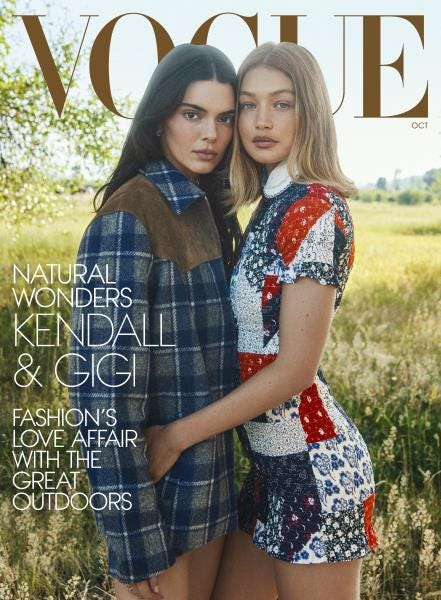
If you look at Vogue US’s 2025 covers, there’s a noticeable dwindling in intrigue. From Winter 2025 to September 2025, the covers feature a lone celebrity, posing stationary against a colour-blocked backdrop. Of course, styling, lighting, and posing elevate what would otherwise be very boring cover images, but where it gets strange is from October 2025 towards December 2025. October’s cover stars are Kendall Jenner and Gigi Hadid. Both supermodels are seen holding each other intimately against the backdrop of an idyllic countryside escape, gazing into the barrel of the camera. All in all, it’s a forgettable cover at best, and at worst, it’s a glazing of the American West, a choice which feels unconsidered in a worsening political climate, but Vogue isn’t currently in the business of valuing its political integrity.
Where things get really weird, artistically, is the December cover starring Timothee Chalamet in what can only be described as “galaxy leggings but make it the whole page.”
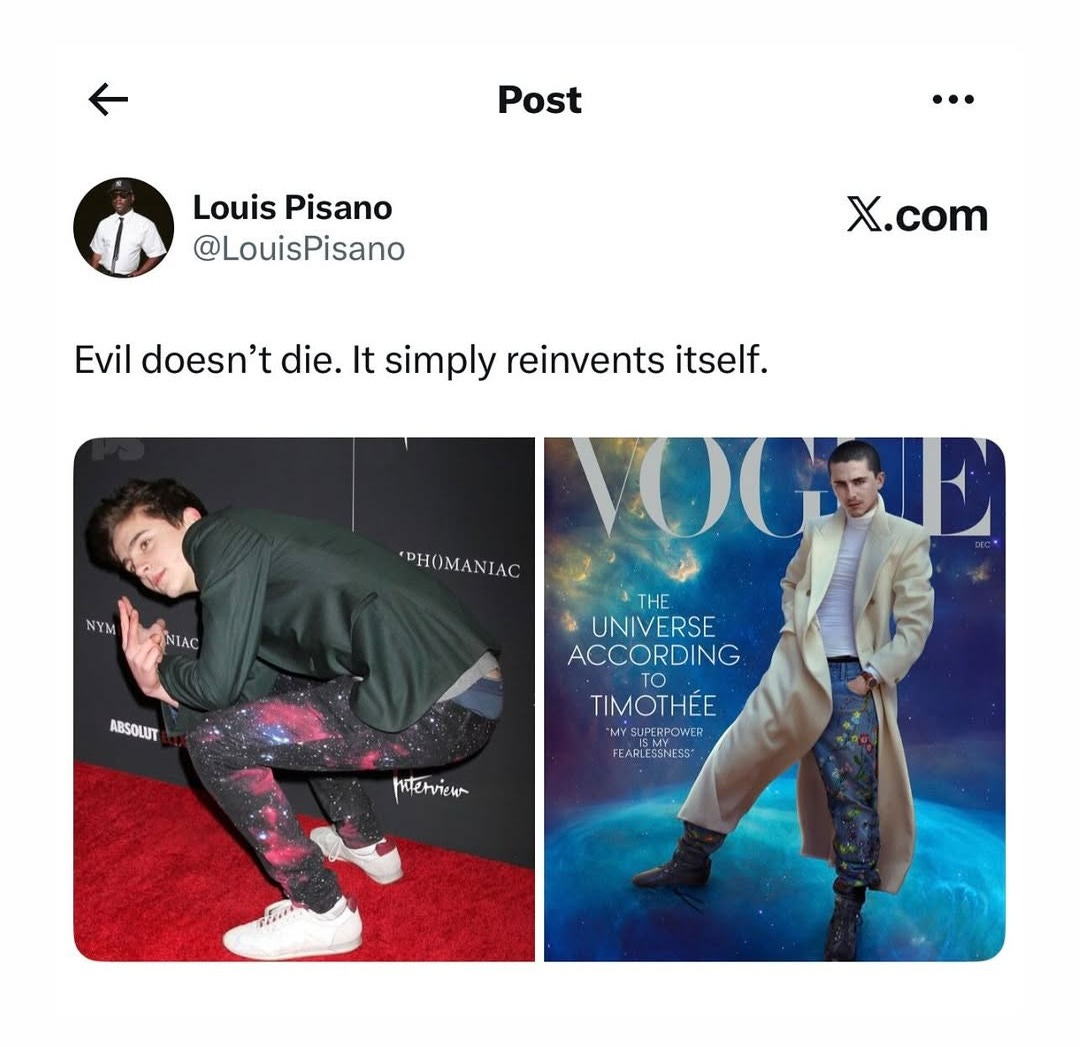
This choice to me and many others was dumbfounding. Legacy media, over time, has taken a strange turn into levying big names for lacklustre concepts (the Hollywood Issue for Vanity Fair is still confusing me to this day7), and there’s hardly anything anyone can do about it because who’s going up against Vogue US?
In her essay, Is Vogue Embarrassing Now? Tori West writes, “Her [Chloe Malle’s] appointment is hardly aspirational for readers already exhausted by the industry’s relentless cycle of nepotism. Yes, Malle did spend eight years at the publication, most recently as Editor of Vogue.com, where she doubled its direct traffic to around 14.5 million monthly visitors, but those achievements don’t erase the broader issue. For budding journalists from marginalised backgrounds, it’s yet another reminder that positions of power still go to the well-connected, not entirely the most deserving, relatable or talented.”
Nepotism is boring, decidedly so. The lack of social or economic awareness that gradually trickles down from so high up makes it incredibly hard to engage with any work made by someone who wants you to feel like they understand. They understand passion, and they understand hunger, but in a context that has only ever propelled them forward. There is no panic in commodifying their art because art is a currency they can afford to stow away. Most people have to trade their art to feed themselves, and being hungry goes both ways. I don’t doubt the work someone like Chloe Malle or Taylor Swift, or Sarah J Mass had to do to succeed, but I wonder if succeeding will make the work any better.
Tori concludes that, “The Bezos Met Gala takeover signals something far more unsettling for the media industry, it’s brewing a culture where creative institutions and media no longer serve the public, but the whims of billionaires and the ultra-powerful.”
Thankfully, there’s a collective understanding that the West is not the titan of creativity we’ve been told it is. Vogue China still remains as my favourite iteration of the publication, and its 2025 covers have continuously reminded me that there’s a lot to be desired, still.

And so the hunger necessary for good art does not matter to someone like Taylor Swift. It does not matter to wealthy authors who have built careers on the stacks of books that, over time, seem to dip in quality or lose their magic because the author, or publishing house, or record label, demands wider margins. They demand reach and impression and engagement, no matter the audience, no matter the press. I am leaning into the extremes of it all because it seems that’s where we’re headed. Extremism is the only way for lost voices to find a path forward, and so I will be incredibly loud about the lack of willingness, the leniency in stress-testing a creative idea, a practice, or a concept simply because there is no real financial incentive to it. Money is not an issue for the overfed, and yet they grow more and more gluttonous.
I’ve had this thought over the past few weeks, considering the numerous examples of creativity, particularly in journalism, that need to be expressed entirely from the author's perspective. Writers starting substacks, musicians going independent. There is a sense of anticipation suffusing across my social media. There’s fear, of course, a genuine concern for the perverse novelty of how unpredictable people with power behave when they hold everything from our bills to our art hostage. There’s also some hope, I think. Whatever amount of it feels urgent and more necessary than ever now. This urge to disaffiliate from the culture of buying and selling.
This might be due to how I’ve curated my algorithm, but everyone is decentralising their art, or at least, making the effort to do so. It’s hard, of course, because there’s still money to be made, but the essence of creation lives in our desire to pour out our innermost feelings. What we want people to know or feel through our work transcends word counts. Story-length essays and hour-long videos that carry you across the river of slop into a new realm of understanding cannot be done if you are not hungry to create. The wait to satiate this kind of hunger is slow. It cannot be done with tools designed to optimise. There is nothing optimal about the human condition. Art is indelicate and nonconforming; it never works well under algorithmic pressure. The goal is to create, then sell, not the other way around. This conversation surrounding the commodification of art certainly did not begin with me, and I hope it does not end with you reading this essay.
I found an excerpt from this documentary that was honestly so beautiful. A captivating six minutes.
You do not need 30 variants of this album. Please spend ur money wisely, guys, omg
https://news.northeastern.edu/2023/08/11/taylor-swift-economy-impact/
I dislike this article so much. I think it’s exclusionary and devoid of any real critiques of Interview With The Vampire outside of “hot, gay vampires talking about their feelings at length and women like that because they’re vapid”
I read this brilliant piece on Nostalgia bait and how it will inevitably overpower us, work to Akira.
A paper someone wrote on Sarah J. Maas and the racial hostility found in her fandoms, which is unfortunately not addressed by Maas herself.